
Oral Cancer Awareness Month

Nearly 40,000 people nationwide are diagnosed with oral cancer every year, resulting in approximately two dozen deaths daily.  But according to the Dental PR News article, “Education and Exams for Oral Cancer Awareness Month,” there is something you can do to avoid becoming part of this statistic.  Early detection and diagnosis are key elements to fighting this deadly disease.  Survival rates skyrocket when oral cancer is found in the early stages, leading many dentists to recommend annual screenings in addition to maintaining good oral hygiene.

As part of Oral Cancer Awareness Month, education about the disease is being targeted.  There are several early indicators of oral cancer that would warrant a trip to the dentist and could potentially lead to early detection.  The most notable symptoms include red or white discoloration of soft tissues in the mouth, sores that do not heal within a two week period, and persistent hoarseness.  More advanced indicators can include numbness in the oral area, difficulty moving the jaw or tongue, and ear pain.  Additionally, some people experience a sensation that something is lodged in the throat, difficulty swallowing, and a lump or thickening that develops in the mouth or neck.  Experiencing any or all of these symptoms should prompt you to contact your dentist to request an oral cancer screening as soon as possible.

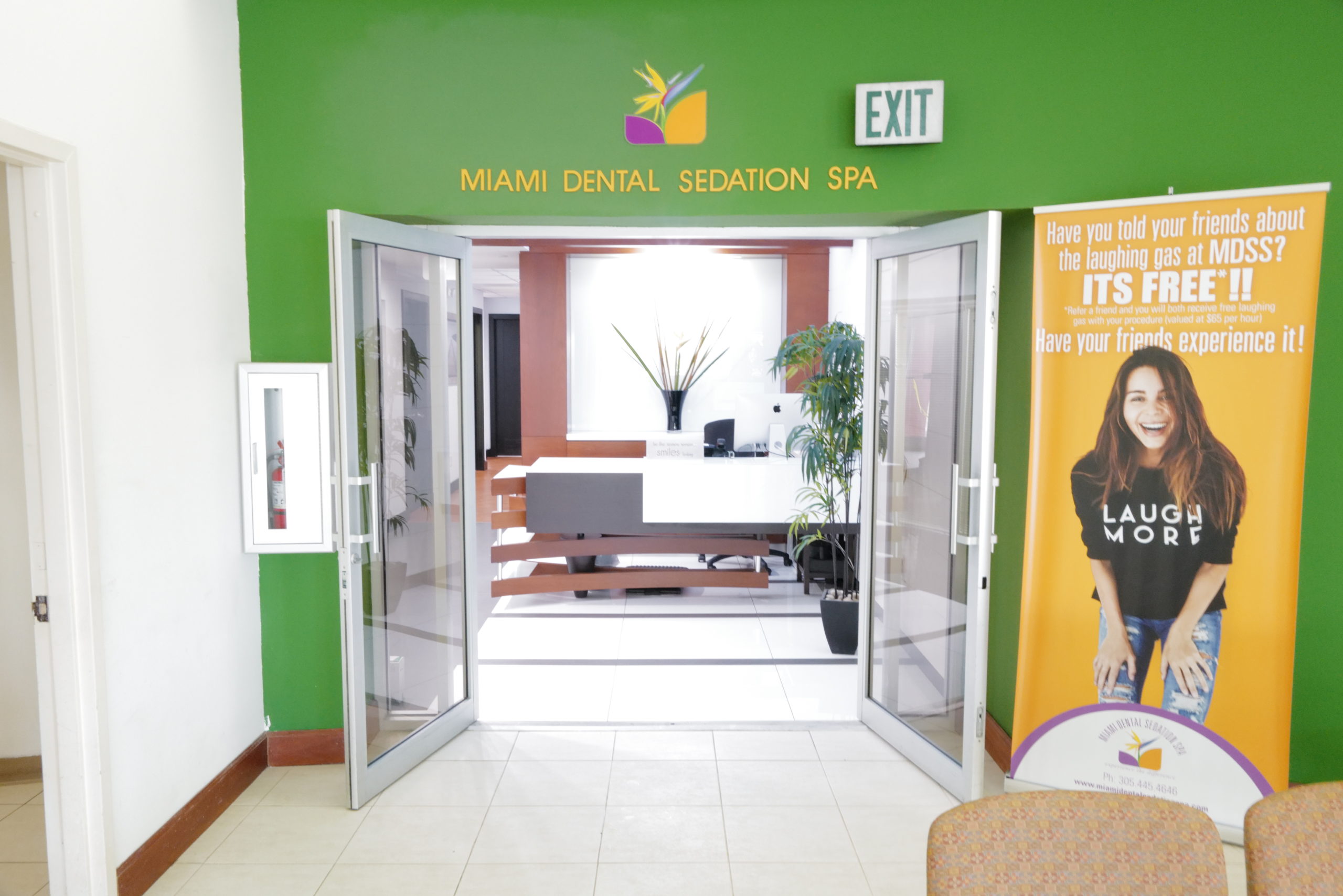
At Miami Dental Sedation Spa, an oral cancer screening is routine with your visit.  They use a very simple technology, Vizilite Plus, which assists in early detection of oral abnormalities.  The patient simply rinses with a cleansing solution before the mouth is examined under a specially designed light.  It is a completely painless procedure that is very quick and effective.  Oral cancer is one of the most curable diseases when detected early.  Regular visits to your dentist as well as being aware of changes in your mouth will help you to fight this fatal disease.

Written by Mark Paulsort

Follow me on Twitter:  https://twitter.com/#!/MPaulsort78

Share and Enjoy:
  • Digg
  • del.icio.us
  • Facebook
  • Mixx
  • Google Bookmarks
  • Furl
  • NewsVine
  • Reddit
  • StumbleUpon
  • YahooMyWeb
  • Live
Posted in Dental care, dentist miami, dentist news, miami dentist, oral health | Tagged , , , , | Leave a comment

Research Explains Source of Dental Phobia

Many people suffer from anxiety when visiting their dentist, and whether it’s fear of pain or simply the unknown, it’s difficult to pinpoint the root of the problem.  However, a group of researchers attempted to investigate deeper into the issue and found some pretty amazing results.  Would you believe that hair color can be an indicator of who has dental phobias? It’s true, as reported in the msnbc.com story, “Why redheads and dentists don’t get along,” by Emily Main.  The research was published in the Journal of the American Dental Association and identified a specific gene, that just so happens to occur most often in redheads, that can trigger heightened anxiety about dental work.

The study examined 144 participants, 67 of which were natural redheads and 77 who had dark hair.  Those who took part in the research were first asked to answer a series of questions about fears or anxieties when visiting the dentist, and then gave blood samples which were tested for specific gene variants commonly found in redheads.  From the results, researchers were able to conclude that those carrying the specific gene, MC1R, reported that they avoided the dentist because of fear and anxiety, twice as often as people without.  85 people in the study ended up with the MC1R gene, and 65 of them were redheads.  The study proposed that people carrying this gene can be resistant to some kinds of pain medications, leading researchers to conclude that redheads are more prone to negative experiences at the dentist due to increased levels of pain, leading to higher anxiety and fear of repeat visits.

While the study is no doubt fascinating, it doesn’t necessarily help in easing anxiety or fear about going to the dentist, regardless of hair color.  Several recent studies have linked oral health to other major medical conditions, making it that much more important to visit your dentist regularly.  Unfortunately, those paralyzed by fear, often skip these crucial visits, therefore potentially putting themselves at greater risk for more serious complications down the road.  But if you haven’t been to the dentist recently, Kimberly A. Harms, DDS, consumer advisor of the American Dental Association, says that you might be surprised if you can get yourself there again.  She claims that pain has become much more minimal thanks to effective anesthesia that is more commonly used.  Sedation dentistry has become a welcome relief for many as the practice helps calm the nerves and makes dental procedures virtually pain free.  And, it’s not just available to redheads, so there’s really no excuse.

Written by Mark Paulsort

Follow me on Twitter:  https://twitter.com/#!/MPaulsort78

Share and Enjoy:
  • Digg
  • del.icio.us
  • Facebook
  • Mixx
  • Google Bookmarks
  • Furl
  • NewsVine
  • Reddit
  • StumbleUpon
  • YahooMyWeb
  • Live
Posted in aesthetic dentistry, dentist news, sedation dentistry | Tagged , , | Leave a comment

Improve Your Smile with Cosmetic Dentistry

Cosmetic dentistry has seen astronomical growth in popularity over the last few years.  And while the American Dental Association doesn’t acknowledge a specialty field in such work, many dentists are performing a variety of procedures that can not only improve your oral health, but also one of your best, most prominent features: your smile.  A recent article in Dental Health Magazine, “Top 5 Cosmetic Dentistry Treatments that Bring Back Your Amazing Smile,” discusses some of the most commonly performed treatments that enhance your pearly whites.

  • Gingivectomy, also known as gum contouring or reshaping, is best suited for patients with uneven gums.  By exposing more of the teeth and framing them evenly, this procedure can make your smile stand out.
  • Composite Resin restoration can be used to correct chipped teeth or to replace metal cavities, helping to conceal imperfections with its natural coloring.
  • Tooth whitening is among one of the most popular procedures, as a whiter, brighter smile, is easily attainable, and undeniably effective at improving your smile.
  • Tooth shaping is appropriate for those with misshapen teeth.  Whether pointy or just extremely long, this procedure can help even your teeth in an aesthetically pleasing fashion, with minimal pain and complications.
  • Dental veneers refer to a very thin layer of material that is placed over the surface of your teeth to cover up imperfections.  Composite and porcelain are the two types of veneers currently available.

Whether you’re unhappy with the discoloration or alignment of your teeth, or if you suffer from missing, chipped, or broken teeth, the practice of cosmetic dentistry provides a variety of procedures that can not only help aesthetically, but also structurally.  Dental implants used in the field can help support a failing jaw bone as well as provide a patient with the strength required to chew, or even speak normally again.  Missing teeth can also cause existing ones to misalign or shift, which can be repaired fully through cosmetic dentistry.  It’s really not that surprising that the area of cosmetic dentistry has found much success in recent years.  Not only can restorative work improve the look and function of your mouth, it can boost your self-confidence and esteem, a priceless side-effect.

Written by Mark Paulsort

Follow me on Twitter:  https://twitter.com/#!/MPaulsort78

Share and Enjoy:
  • Digg
  • del.icio.us
  • Facebook
  • Mixx
  • Google Bookmarks
  • Furl
  • NewsVine
  • Reddit
  • StumbleUpon
  • YahooMyWeb
  • Live
Posted in cosmetic dental procedures, cosmetic dentistry, dental implants, teeth whitening | Tagged , , , | Leave a comment

Oral Bacteria to Blame for Blood Clots

At the recent Society for General Microbiology’s Spring Conference, held in Dublin, Ireland, scientists revealed their work on the correlation between oral bacteria and a life-threatening condition, known as endocarditis.  The bacteria, scientifically named Streptococcus gordonii, are commonly found in the mouth and contribute to the development of plaque.  Brushing and flossing regularly, as well as visiting your dentist twice a year can help to maintain a healthy amount of bacteria, lowering the risk of developing a more serious condition.  It’s when oral hygiene is neglected and left unchecked that real issues can arise, as reported in the Medical News Today article, “Blood Clots May Be Triggered By Dental Plaque Bacteria.”

If the bacteria, S. gordonii, is able to enter the blood stream, say through bleeding gums, they have the ability to mask themselves as human proteins, causing a number of problems.  Teams of researchers from the University of Bristol and the Royal College of Surgeons in Ireland, have discovered that once the bacteria produces the molecule that mimics the human protein fibrinogen, platelets are activated, causing them to clump together inside blood vessels.  The blood clots then surround the bacteria, protecting it from the immune system and antibiotics, making it very difficult to treat infection.  Furthermore, the clumping can cause endocarditis, or growths on the heart valves, which can ultimately block the blood supply to the brain or heart.

Dr. Helen Petersen, presenter of the study, said that their research is leading to a better understanding of the relationship between bacteria and platelets, and that hopefully new treatments can be developed for infective endocarditis.  Currently, the condition is only treated with strong antibiotics or surgery, with a fatality rate of about 30%.  By identifying the molecule created by the S. gordonii bacteria, the team is hopeful that they will be able to design new compounds that could inhibit it.  Researchers are also investigating other dental plaque bacteria to determine if they have similar properties which contribute to other life-threatening conditions.  Dr. Petersen claims that their ongoing study has shown one clear and crucial piece of knowledge; that keeping your mouth healthy through practicing good oral hygiene helps keep bacteria in check, which absolutely contributes to overall well-being.

Written by Mark Paulsort

Follow me on Twitter:  https://twitter.com/#!/MPaulsort78

Share and Enjoy:
  • Digg
  • del.icio.us
  • Facebook
  • Mixx
  • Google Bookmarks
  • Furl
  • NewsVine
  • Reddit
  • StumbleUpon
  • YahooMyWeb
  • Live
Posted in Dental care, dentist news | Leave a comment

High-Fluoride Toothpaste to Fight Tooth Decay

It is common knowledge that everyone should brush their teeth at least twice a day in addition to flossing and visiting your dentist semi-annually, to fight cavities and maintain good oral hygiene.  The use of fluoride to assist in this routine has recently come under fire though, as many believe that adding it to drinking water is not beneficial.  However, a recent study out of Sweden may change a few minds.  The Science Daily article, “Brushing Teeth: New ‘Massage Method’ Quadruples Protection Against Tooth Decay, Study Suggests,” discusses not only the method in which fluoride can be delivered, but also the benefits of the mineral.

Approximately eight years ago, a new type of toothpaste was introduced in Sweden and has recently been scientifically evaluated for the first time.  The new product boasts three times as much fluoride as standard toothpastes and is available without prescription.  A research team at the University of Gothenburg’s Sahlgrenska Academy has studied 16 volunteers, all of which used a variety of brushing techniques, both the standard and “high-fluoride” toothpastes, and brushed two or three times daily.  One of the more striking finds in the study was that those who used the high-fluoride toothpaste three times a day had four times better fluoride protection than those who only brushed twice daily with the standard paste, suggesting not only that the increase in fluoride was helpful, but that the additional brushing was also key.

Also included in the study was the testing of a new method of brushing that involves rubbing toothpaste onto teeth and gums with a finger.  It was found that this “massage method” was just as effective as a third fluoride application using a toothbrush.  Anna Nordström, a researcher from the Institute of Odontology at the Sahlgrenska Academy, suggests that this method may be useful for giving your teeth a quick and easy extra “shot” of fluoride during the day.  She warns that massaging should not replace brushing, however, that it’s simply a convenient way to add an extra treatment.  Studies continue to show that fluoride has, and should continue to play, a major role in the fight against tooth decay.  If you are at high risk for tooth decay, it is often recommended that you use high-fluoride toothpaste, and talk to your dentist about additional fluoride procedures that may help to further protect your teeth.

Written by Mark Paulsort

Follow me on Twitter:  https://twitter.com/#!/MPaulsort78


Share and Enjoy:
  • Digg
  • del.icio.us
  • Facebook
  • Mixx
  • Google Bookmarks
  • Furl
  • NewsVine
  • Reddit
  • StumbleUpon
  • YahooMyWeb
  • Live
Posted in Dental care, dentist news, fluoride, oral health | Tagged , , , | Leave a comment

Bottled Water Could Cause Tooth Decay

With Children’s Dental Health Month occurring last month, many recent stories in the dental care world have revolved around the rising rates of tooth decay in kids.  Advice has been given about ensuring your children are brushing and flossing daily, visiting their dentist regularly, avoiding sugary snacks and beverages, but it’s not very often that you hear to keep bottled water away from your little ones.  A recent msnbc.com article, “Bottled water may boost kids’ tooth decay, dentists say,” by JoNel Aleccia, does just that.  As more and more families are skipping tap water in lieu of the bottled type, some feel the lack of fluoride might be contributing to the increase in cavities.

According to Jonathan D. Shenkin, spokesman on pediatric dentistry for the American Dental Association, everyone should brush twice daily with a fluoride toothpaste, visit their dentist bi-annually for a check-up and fluoride treatment, and drink tap water for an additional dose of the mineral.  Without the tap water, a key component is missing.  Even the Centers for Disease Control and Prevention have announced that bottled water may not have enough of the necessary fluoride to prevent tooth decay.  And it’s no secret that many kids now-a-days are drinking it.  A recent study in the Archives of Pediatrics found that about 45% of parents give their kids bottled water exclusively, while a similar study conducted by Pediatric Dentistry journal found the stat to be about 70%.  Is it coincidental that at the same time, about 42% of kids from 2-11 in the U.S. have cavities in their baby teeth, according to another CDC study? Some think not.  Another interesting fact discovered through the study is that kids of all socio-economic levels were experiencing an increase in decay, so access to a dentist alone cannot be blamed.

To be completely fair to the bottled water industry, it’s important to point out that there hasn’t been any research conducted that directly ties bottled water to tooth decay.  Additionally, the industry has taken steps to squelch any rumors by producing at least 20 different fluoridated bottles of water, out of approximately 125 different types sold. Additionally, bottled water does not contain any sugar, which is known to lead to tooth decay.  But many dental experts feel that there is a link, however without the proper funding to conduct any research, it is officially undetermined at this point.  Still, tooth decay is on the rise, and whether bottled water, poor brushing and/or flossing habits, infrequent trips to the dentist, poor food and beverage choices, or a combination of all of them, is to blame, there’s still one thing we do know.  By practicing good oral hygiene habits and proactively seeking out dental treatments, tooth decay can be avoided, and that’s true for people of all ages.

Written by Mark Paulsort

Follow me on Twitter:   https://twitter.com/#!/MPaulsort78

Share and Enjoy:
  • Digg
  • del.icio.us
  • Facebook
  • Mixx
  • Google Bookmarks
  • Furl
  • NewsVine
  • Reddit
  • StumbleUpon
  • YahooMyWeb
  • Live
Posted in Dental care, dentist news, fluoride, oral health | Tagged , , , | Leave a comment

The Scoop on Saliva

Most people focus on brushing and flossing their teeth when trying to maintain good oral hygiene.  But there’s another key component that shouldn’t be overlooked: saliva.  That’s right, commonly referred to as “spit,” the saliva in your mouth plays a very important role.  Without saliva, tooth decay would dramatically increase, digestion could be more difficult, and food just wouldn’t taste right.  There are many benefits to saliva, and Michael Brennan, DDS, MHS, director of the Sjogren’s Syndrome and Salivary Disorders Center at Carolinas Medical Center in Charlotte, North Carolina, recently shared his expertise on the topic in the ABC affiliate, KXLY, article, “Why you should salivate over benefits of saliva.”

According to the expert, saliva neutralizes acid and helps rid the mouth of decay causing sugars.  Therefore, if you aren’t producing enough saliva, you are much more prone to tooth decay.  Additionally, saliva helps move food through your intestines once ingested, and the enzymes found in the slippery stuff help break down food and are a key in aiding digestion.  And that’s not all; saliva is actually an important key in speech, allowing your mouth to work correctly when forming words.  Clearly, a lack of saliva would not go unnoticed.  Brennan listed the following as symptoms that may be found if not enough saliva is present: difficulty talking, chewing, or swallowing, dry or burning throat, sore or cracked tongue, dry or peeling lips, oral yeast infections, an abnormal increase in dental cavities, and digestive issues.

If you find yourself experiencing dry mouth often, be sure to keep yourself hydrated.  Sipping small amounts of water can help reduce symptoms, and adding a bit of lemon juice can stimulate saliva flow.  However, be cautious with sugar or acidic sweeteners, which can lead to dental decay and erosion.  Chronic dry mouth can be a symptom of a condition of Sjogren’s syndrome, when accompanied by dry eyes.  Sjogren’s syndrome is an autoimmune disorder where the immune cells destroy moisture-producing glands, and is often found in women in their 40s.  In fact, many attribute the symptoms to menopause and don’t seek the medical attention that they need.  The best course of action if you experience any of the above symptoms is to talk to your doctor or dentist.  While some over the counter products and behavioral changes can ease your symptoms, only a doctor or dentist can determine if there’s a more serious health condition and can prescribe the appropriate treatments.  Most of us take our saliva for granted, not realizing how vital it is to our overall well being.  Like many things in life, it’s not until it’s gone that we realize how much we’d miss it!

Written by Mark Paulsort

Follow me on Twitter:  https://twitter.com/#!/MPaulsort78

Share and Enjoy:
  • Digg
  • del.icio.us
  • Facebook
  • Mixx
  • Google Bookmarks
  • Furl
  • NewsVine
  • Reddit
  • StumbleUpon
  • YahooMyWeb
  • Live
Posted in Dental care, dentist news, oral health | Tagged , , | Leave a comment

Straighten Your Teeth Without Braces

Studies show that one of the initial traits people notice when meeting someone for the first time is their smile.  This explains why a bright, white smile is so desirable, leading to an abundance of products which can be purchased at any number of drug stores around the country.  But what can you do if you’re smile is pearly white and crooked? There aren’t any quick fixes that can be picked up at the general store for that.  Many adults faced with this situation are reluctant to discuss orthodontic procedures with their dentist.  The thought of having traditional braces seems to be embarrassing and horrifying for most grown-ups, and the thought of spending 12 to 18 months with metal brackets attached to teeth is often enough to deter most from seeking corrective treatment.  But you don’t have to grin and bear it any longer, as there are several options now available for discreet orthodontic treatments.

Shawn Watson’s about.com article, “Straight Teeth Without Braces? It’s Possible With Invisalign,” describes one of the leading products available.  The author interviewed orthodontist, Dr. Randy Kunik, from Austin Texas, about the treatment.  According to Kunik, there are several advantages to using this product.  Because Invisalign retainers, or trays, are transparent, they are much more discreet than traditional braces.  They are apparently very comfortable to wear and are more hygienic too.  They are appropriate for patients of any age, provided all teeth have fully erupted.  The cost is comparable to traditional braces, and most insurance companies cover Invisalign under their plans.  While orthodontists are considered specialists when it comes to straightening teeth, you do not need to visit one in order to use this method.  Any dentist can become an Invisalign provider by completing the necessary training.

If you are embarrassed by the appearance of your crooked or misplaced teeth, don’t let your desire to correct them be overshadowed by your fear of traditional braces.  There are several options available, including Invisalign, which is an effective and discreet method to improve your smile.  Talk to your cosmetic dentist today to explore your options.

Written by Mark Paulsort

Follow me on Twitter:  https://twitter.com/#!/MPaulsort78

Share and Enjoy:
  • Digg
  • del.icio.us
  • Facebook
  • Mixx
  • Google Bookmarks
  • Furl
  • NewsVine
  • Reddit
  • StumbleUpon
  • YahooMyWeb
  • Live
Posted in cosmetic dental procedures, cosmetic dentistry, Invisalign | Tagged , , | Leave a comment

Chronic Heartburn and Dental Care

If you suffer from chronic heartburn, new research indicates that you should not only be concerned about your esophagus, but your teeth as well.  The condition, gastroesophageal reflux disease or GERD, occurs when the acidic contents of the stomach escape into the esophagus, often leading into the mouth, causing burning pain.  The study, described in the MSN Health article, “Acid Reflux From Chronic Heartburn May Damage Teeth,” followed patients suffering from the condition over a six month period and found over half had much worse tooth wear and erosion than their healthy counterparts.  Dr. Daranee Tantbirojn, associate professor at the University of Tennessee and study lead author says that most dental professionals are aware of this situation, but their goal is to raise awareness among the public, considering the disease is very common.

Tooth erosion is normal in all mouths, due to chewing, says Tantbirojn, however approximately half of those studied experienced erosion several times higher than those without the disease.  In the study, researchers used an optical scanner to measure the effects that heartburn had on the teeth of 12 patients.  Several of the patients who experienced this rapid erosion claim that they are currently taking medication for their condition, but still have reflux episodes. Dr. David Leader, associate clinical professor at Tufts University School of Dental Medicine, states that once the outer coating of teeth, or enamel, is gone, it’s gone for good.  He notes that the only thing to do is wait for the erosion to get bad enough for treatment, which could include a filling, veneer, or crown.

The prognosis seems bleak, but Tantbirojn believes there are preventative measures that can be taken.  Saliva acts as a buffer as it has the ability to neutralize acid, but it’s obviously not enough to keep erosion from happening.  To maximize the benefits though, Tantbirojn recommends that you don’t brush immediately after an acid reflux episode, but using a fluoride rinse may help.  There is also special toothpaste for acid reflux sufferers that can be prescribed by a dentist, as well has taking baking soda or antacids after experiencing reflux to protect the teeth.  Another way to reduce acid in the mouth is to chew Xylitol gum, according to Leader.   And as always, be sure to visit your dentist regularly to stay ahead of any and all dental issues.

Written by Mark Paulsort

Follow me on Twitter:   https://twitter.com/#!/MPaulsort78

Share and Enjoy:
  • Digg
  • del.icio.us
  • Facebook
  • Mixx
  • Google Bookmarks
  • Furl
  • NewsVine
  • Reddit
  • StumbleUpon
  • YahooMyWeb
  • Live
Posted in Dental care, dentist news, fluoride, oral health | Tagged , , , | Leave a comment

Identifying and Treating Gingivitis

Poor oral hygiene can often lead to a number of dental health problems, many of which are often pretty painful.  One of the most common ailments is gingivitis, or inflammation of the gums. A good way to avoid this issue, often caused by bacteria that accumulate on the teeth (plaque), is to learn about the disease.  Recently, Medical News Today published an article, “What is Gingivitis? What Causes Gingivitis?” that describes symptoms, causes, diagnosis, and treatment of this common occurrence.

Gingivitis is a type of periodontal disease that if left untreated, can lead to periodontitis, a much more serious issue that often causes sufferers to lose their teeth.   The most common cause is the accumulation of plaque on and around teeth, which is a normal event that happens in everyone’s mouth.  It’s when the plaque is not removed adequately that the problems begin.  Abundance of plaque forms tartar at the base of the teeth near the gums and can only be removed professionally.  If left untreated, the plaque and tartar will irritate the gums and lead into the condition known as gingivitis.  Other less common causes include hormonal changes (which can occur during puberty, menopause, or pregnancy), some diseases (such as cancer, diabetes, and HIV), some medications, smoking, and family history.  There are several symptoms and signs that may indicate that you may be suffering from gingivitis.  If gums appear bright read or purple and are tender, swollen, soft, or receding, there’s a chance gingivitis may be to blame.  Other signs include halitosis, or bad breath, and bleeding during brushing or flossing.

The good news is that if caught early, gingivitis can be reversed if properly treated.  Upon diagnosis, treatment includes steps to be completed by the dentist in addition to patient actions.  First, plaque and tartar will be removed at the dentist’s office, which can be uncomfortable depending on the amount of buildup that requires removal.  If there are any problem areas, such as poor fitting crowns or bridges, these issues can be addressed next.  At home, it’s crucial that a patient brushes their teeth at least twice a day, flosses at least once a day, and regularly rinses with an antiseptic mouthwash, in order to adequately remove the natural plaque buildup on teeth.  While most cases of gingivitis are treated without complications, if left untreated gum disease can spread to affect teeth and bones, creating much more serious conditions.  Additionally, gum disease has been linked with other serious conditions, such as cardiovascular disease, heart attack, stroke, and even lung disease.  All of this can be avoided through education, practicing good oral hygiene, and regularly visiting the dentist.

Written by Mark Paulsort

Follow me on Twitter:   https://twitter.com/#!/MPaulsort78

Share and Enjoy:
  • Digg
  • del.icio.us
  • Facebook
  • Mixx
  • Google Bookmarks
  • Furl
  • NewsVine
  • Reddit
  • StumbleUpon
  • YahooMyWeb
  • Live
Posted in Dental care, oral health, sedation dentistry | Tagged , , | Leave a comment